How do I multiply my impact as a staff designer?
AT CRITS
Most of my leadership has come from creating structure around craft, clarity, and capability — especially in moments where it would be easier to move quickly and accept “good enough.”
I’m always thinking deeply about if we're solving THE problem…or something adjacent.
When we’re reviewing a flow, I’m thinking about the vision:
How this fits into the larger workflow
What assumptions we’re making
Where this might break later
My feedback always echoes that perspective. It’s less about polish and more about alignment.
DESIGN + ENG
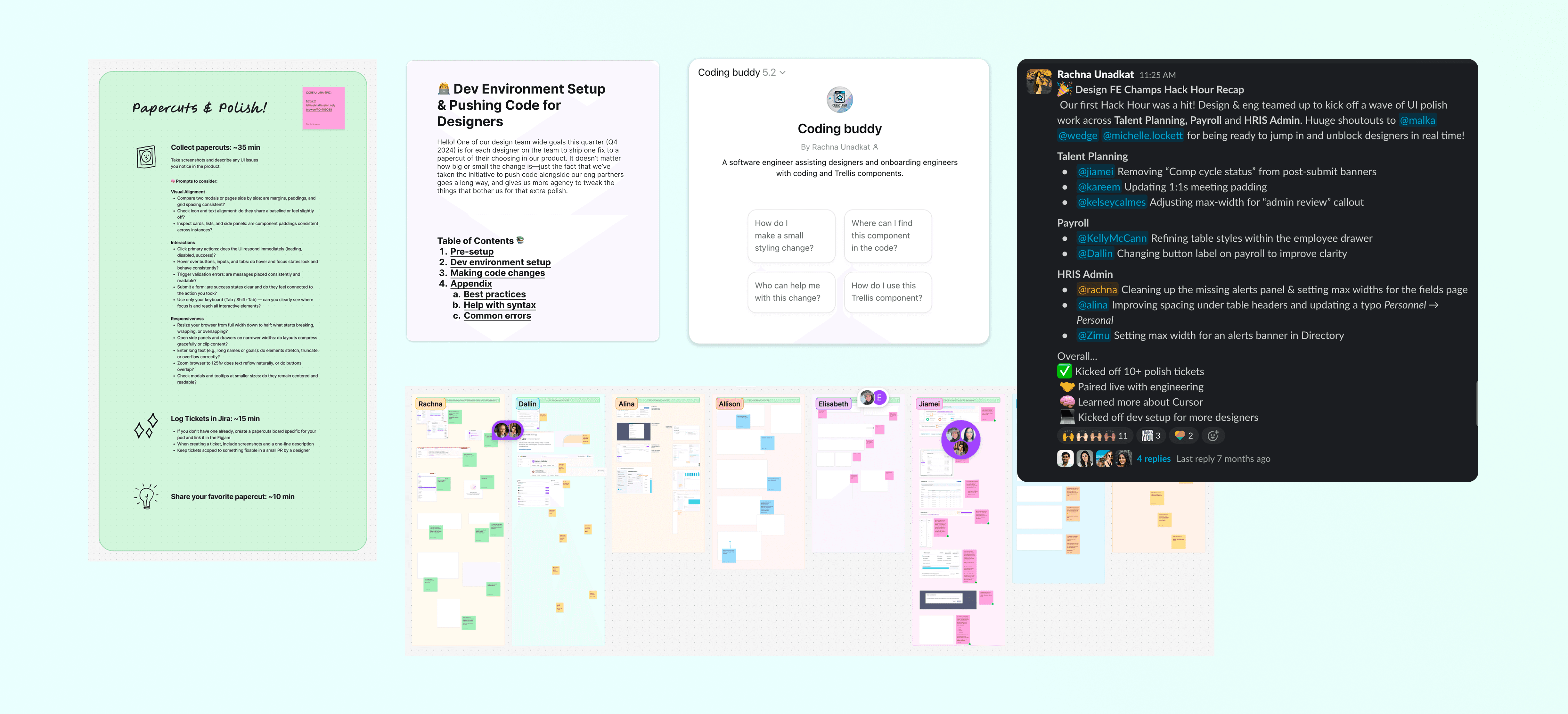
At Lattice, Hack Hour was born because we kept noticing small UI issues sitting in backlogs. Individually minor, but collectively they shaped product quality.
Instead of accepting that friction, I wrote documentation along with another designer to help our team set up their local environments and learn tools like Cursor. We partnered with engineers to host open office hours, created recurring working sessions where designers could fix low-risk issues together, and made meaningful impact with 15+ changes pushed in a quarter.
This wasn’t about turning designers into engineers. It was about staying with the times, encouraging ownership, and raising the bar on product quality in the small details that compound.
DESIGN SYSTEMS
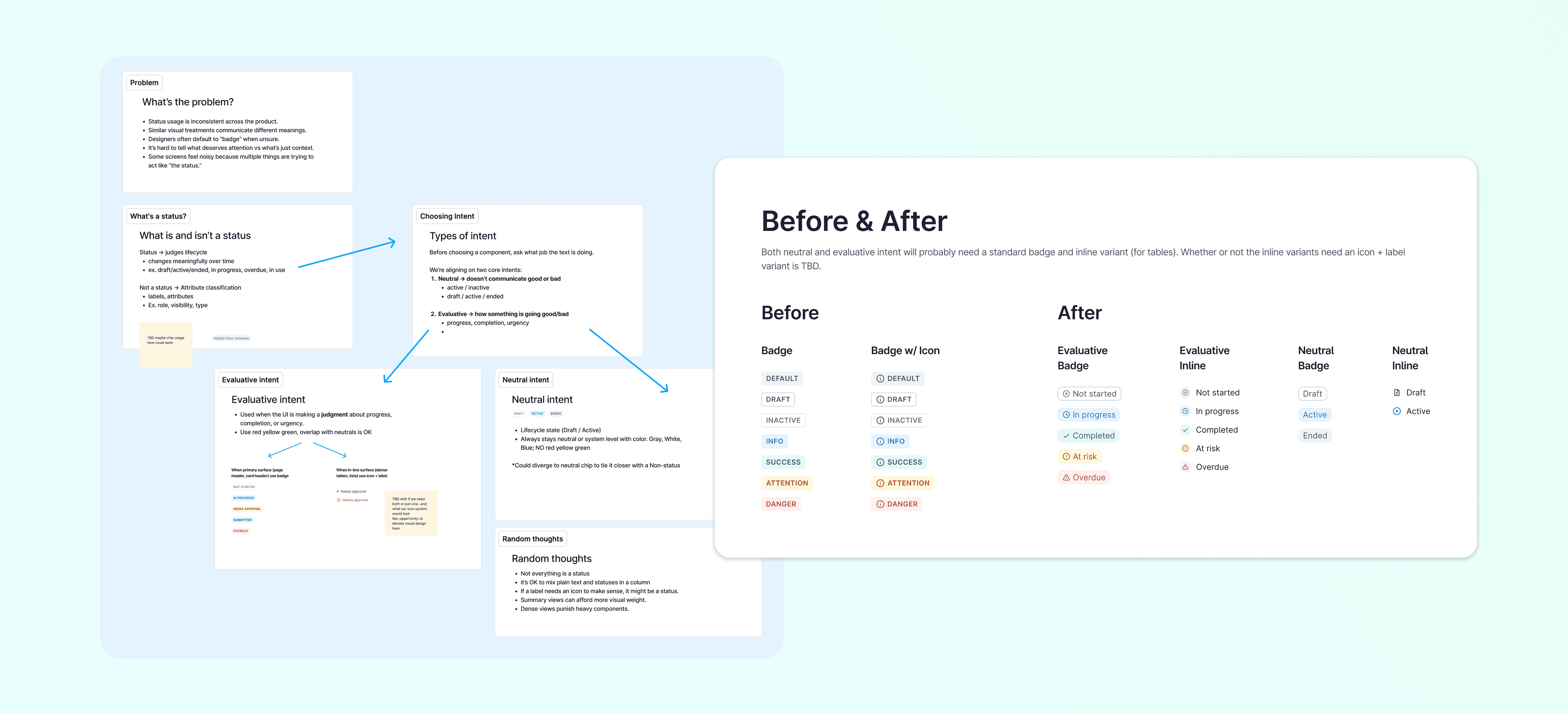
I’m part of a small working group that periodically selects foundational components and improves them at a system level. This cycle, I proposed we focus on statuses.
Statuses show up everywhere in our product — communicating urgency, completion, risk, and system state. Over time, they had splintered into inconsistent styles, unclear intent, and mixed usage. In some places they functioned as metadata. In others, as alerts. In others, as decorative tags.
We stepped back to:
Audit status usage across Lattice
Define what a status actually represents
Clarify intent categories
Improve visual hierarchy
That same mindset shows up in my day-to-day work. If a component doesn’t quite hold up, I don’t default to working around it. I’ll pressure-test it, prototype alternatives, and iterate until it feels durable. Not every situation warrants a shiny, new component and that's a tradeoff to consider in the moment but I don’t believe in accepting the bare minimum just because it’s already in the system.
AI & Design
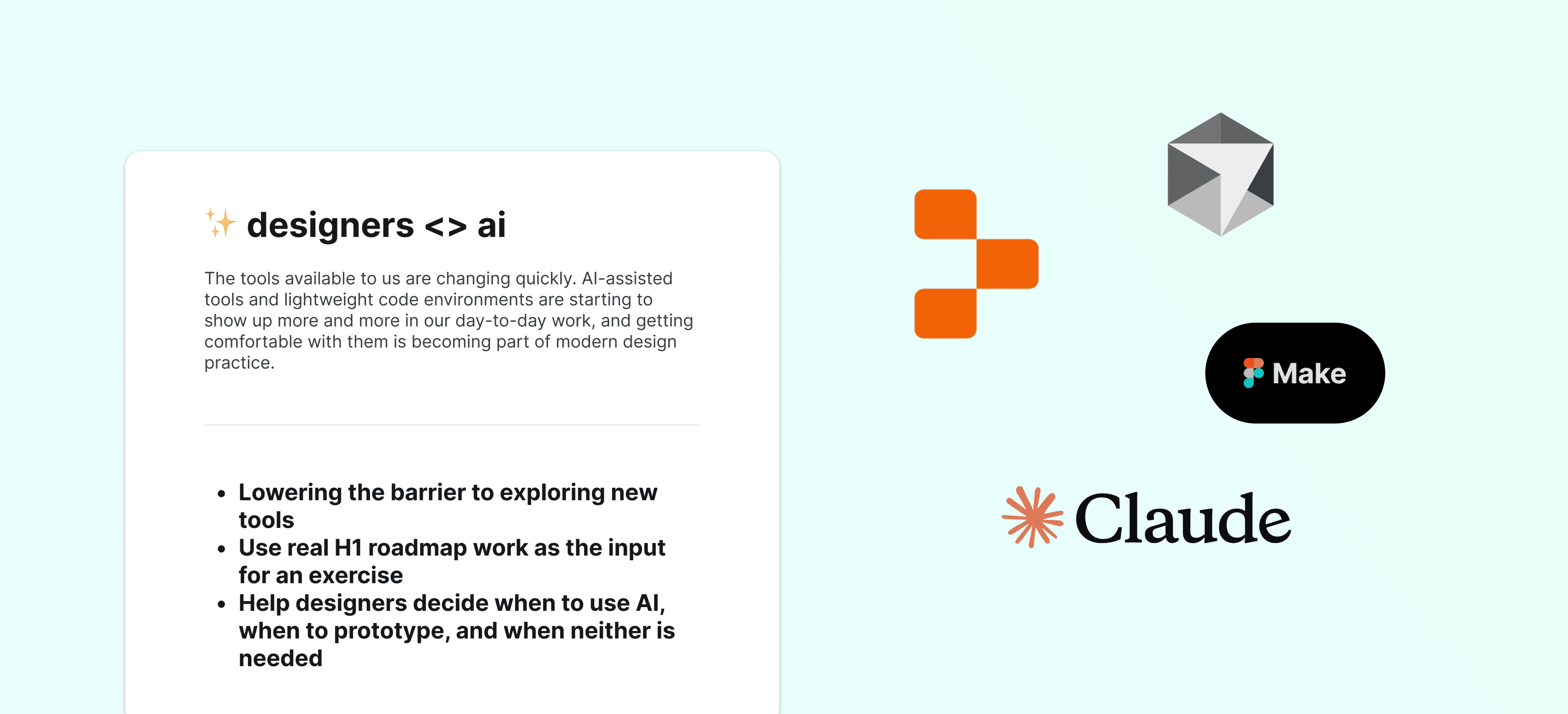
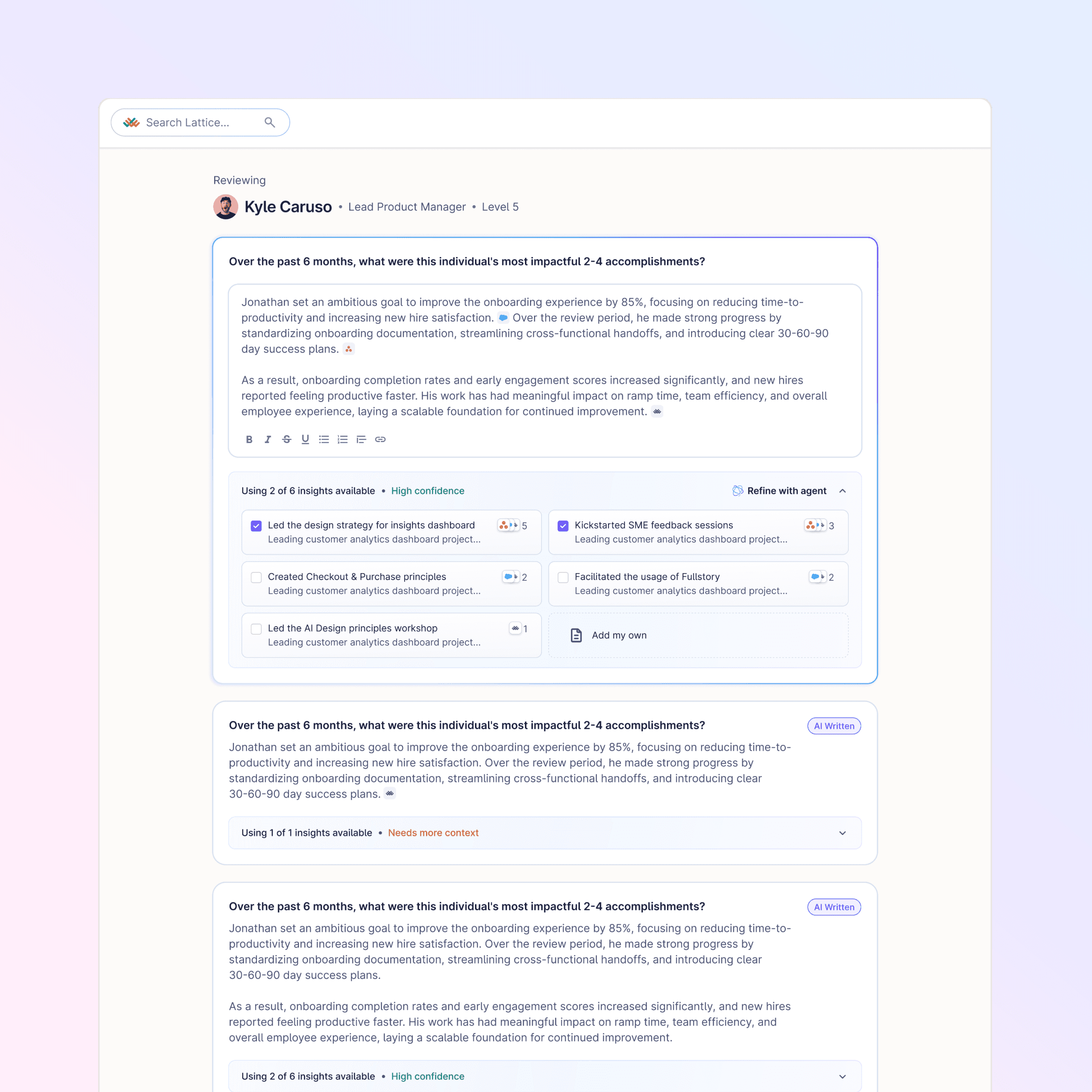
As AI tools evolved rapidly, we had a gap: we were designing AI-powered experiences without fully integrating AI into our own workflows. I wanted to make sure our team stayed current — not reactively, but intentionally.
I joined partnership conversations with tools like Replit and Figma to understand capabilities firsthand and created a structured initiative to explore how these tools could meaningfully fit into our process.
Research writing support
Vision prototyping for product/engineering alignment
Copy refinement and iteration
Early roadmap exploration
We are now testing tools together, sharing perspectives, discussing tradeoffs, and documenting where AI can meaningfully improve our workflow and where it won't.